Wellcome to JYDCOOL
-
-
5th Floor, Building B, No. 73, Saelkang Avenue, Xinqiao Sub-district, Bao'an District, Shenzhen City
Wellcome to JYDCOOL
In the dynamic landscape of modern cooling and ventilation systems, DC fans have firmly established themselves as a cornerstone technology. Their widespread adoption across diverse industries, from consumer electronics to industrial machinery, underscores their significance. To truly appreciate their value, it's essential to understand both how DC fans work and the technical advantages they offer.
How DC Fans Work
Motor Operation
At the heart of every DC fan lies a motor, and in most contemporary models, a brushless DC (BLDC) motor is employed. This type of motor represents a significant leap forward in fan technology. Inside the BLDC motor, the rotor is equipped with permanent magnets, while the stator consists of electromagnetic coils. When direct current is supplied to the coils in the stator, an electromagnetic field is generated. According to the principles of electromagnetism, this magnetic field interacts with the magnetic field of the permanent magnets on the rotor. This interaction results in a torque being exerted on the rotor, causing it to rotate. The absence of brushes in BLDC motors eliminates the friction and electrical arcing that are common in brushed motors, leading to more efficient operation and a longer lifespan.
Blade Design and Air Movement
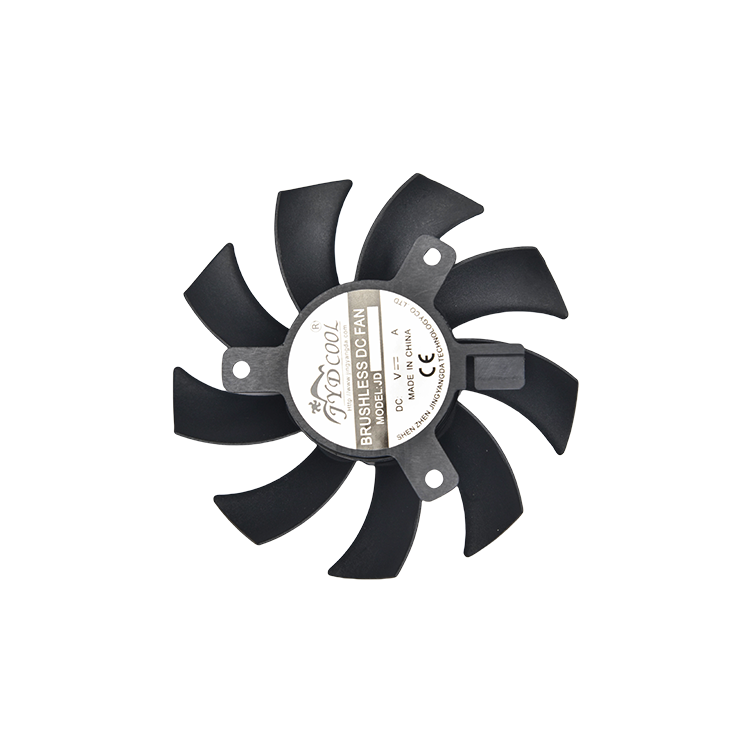
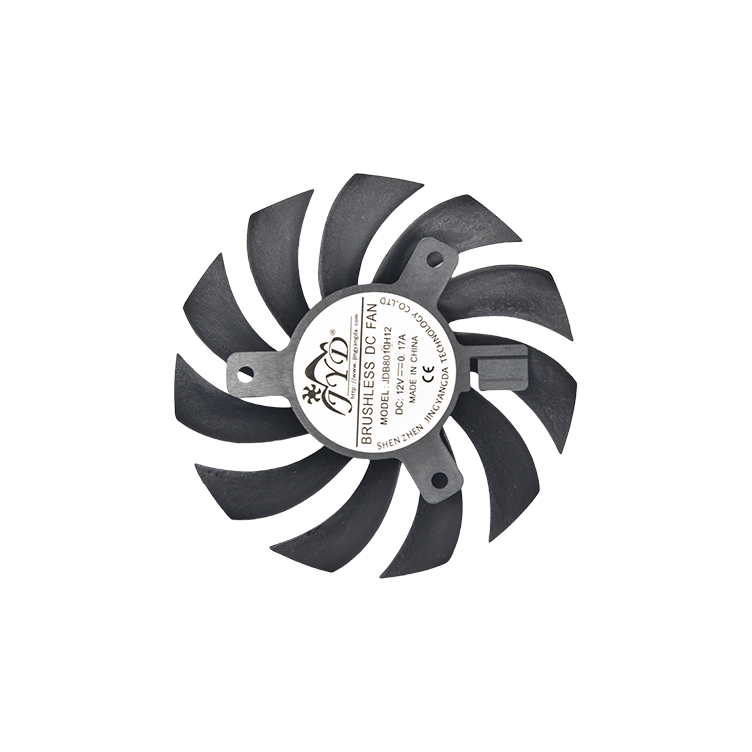
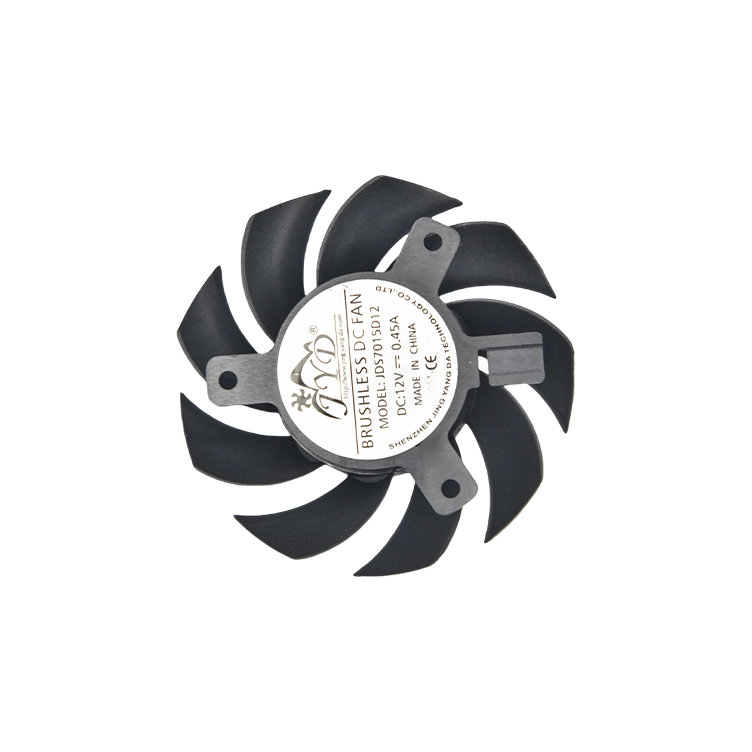
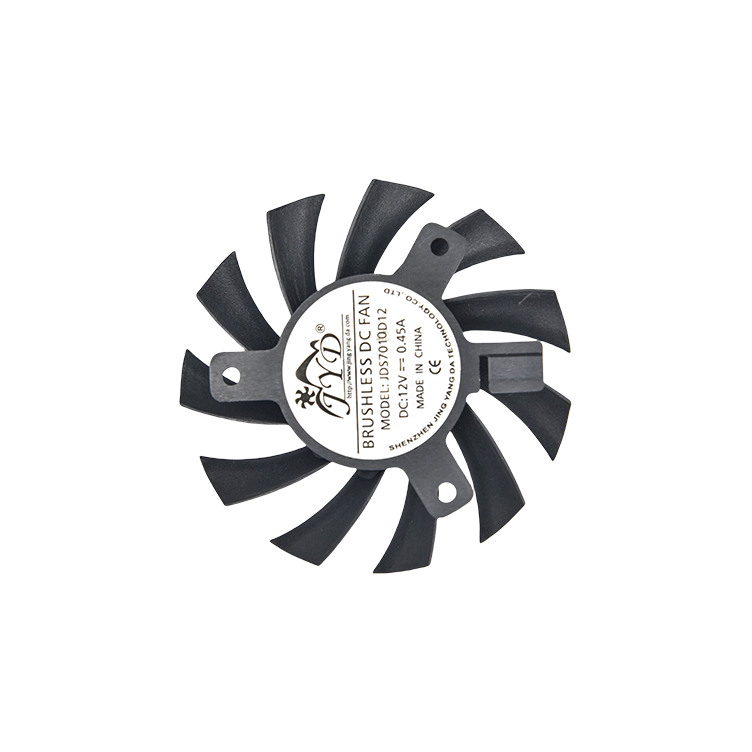
Connected to the motor's shaft are the blades, which play a crucial role in converting the motor's rotational energy into air movement. The design of these blades is highly optimized. Their shape, size, and number are carefully engineered to achieve specific performance goals. For example, blades with a curved or aerodynamic shape are designed to minimize air resistance and maximize the volume of air they can move. In some high - performance fans, a larger number of blades may be used to generate a higher static pressure, which is essential when the fan needs to push air through ducts or against resistance. As the motor rotates the shaft, the blades slice through the air, creating a pressure difference that forces air to move in a particular direction, thereby generating the cooling or ventilation effect.
Control Circuit Functionality
The control circuit in a DC fan is the brain that regulates its operation. It has the ability to precisely control the speed of the motor, which in turn determines the fan's performance. One common method of speed control is through Pulse - Width Modulation (PWM). In a PWM - based control system, the control circuit sends a series of electrical pulses to the motor. By varying the width (duty cycle) of these pulses, the average voltage supplied to the motor can be adjusted. A higher duty cycle means a higher average voltage, resulting in a faster - spinning motor and a higher fan speed. Additionally, many modern DC fans are equipped with sensors, such as temperature sensors. The control circuit can use the data from these sensors to automatically adjust the fan speed. In an electronics enclosure, if the temperature rises, the control circuit will increase the fan speed to provide more cooling, and vice versa when the temperature drops.
Technical Advantages of DC Fans
High Energy Efficiency
One of the most compelling advantages of DC fans is their exceptional energy efficiency. The BLDC motors used in these fans are far more efficient than their brushed counterparts. The elimination of brushes reduces mechanical friction, which in turn decreases energy losses. Moreover, the electromagnetic design of BLDC motors is optimized to convert a higher percentage of electrical energy into mechanical energy for air movement. In practical terms, this means that DC fans can provide the same or even better cooling performance while consuming significantly less power. In applications such as data centers, where thousands of fans are used to cool servers, the energy savings from using DC fans can be substantial, leading to lower electricity bills and a reduced environmental footprint.
Precise Speed Control
DC fans offer unparalleled precision in speed control. The control circuit allows for a wide range of speed adjustments, enabling the fan to be tailored to specific cooling or ventilation requirements. This is particularly important in applications where the heat load or air circulation needs vary. In a computer's CPU cooling system, for instance, the DC fan can adjust its speed in response to the CPU's temperature. When the CPU is under light load and generating little heat, the fan can operate at a low speed, reducing noise and power consumption. However, when the CPU is running computationally intensive tasks and getting hot, the fan can quickly ramp up its speed to provide sufficient cooling. This ability to fine - tune the fan speed not only ensures optimal performance but also extends the lifespan of the components being cooled.
Long Lifespan
Thanks to their brushless design, DC fans have a significantly longer lifespan compared to traditional brushed - motor fans. In brushed motors, the constant friction between the brushes and the commutator causes wear and tear over time, eventually leading to motor failure. In contrast, BLDC motors have no such mechanical wear points. Additionally, DC fans are often constructed with high - quality materials, such as durable bearings and corrosion - resistant housings. These factors combined result in a fan that can operate reliably for tens of thousands of hours. In industrial applications where continuous operation is critical, such as in manufacturing plants or power generation facilities, the long lifespan of DC fans reduces maintenance costs and downtime, improving overall productivity.
Low Noise Operation
Another notable advantage of DC fans is their low - noise operation. The smooth rotation of the BLDC motor, free from the vibration and electrical arcing associated with brushed motors, contributes to a quieter running fan. Additionally, the optimized blade design helps to minimize air turbulence and the resulting noise. In environments where quiet operation is essential, such as in home entertainment systems, medical facilities, or offices, DC fans provide a distinct advantage. They can effectively cool equipment or spaces without generating excessive noise that could be distracting or annoying.
In conclusion, DC fans operate on a combination of advanced motor technology, optimized blade design, and intelligent control circuits. Their technical advantages, including high energy efficiency, precise speed control, long lifespan, and low noise operation, make them the preferred choice for a wide range of applications. As technology continues to advance, DC fans are likely to become even more efficient and versatile, further expanding their influence in the world of cooling and ventilation.